
Why Does Trade Show Freight Get Delayed Even When You Ship on Time?
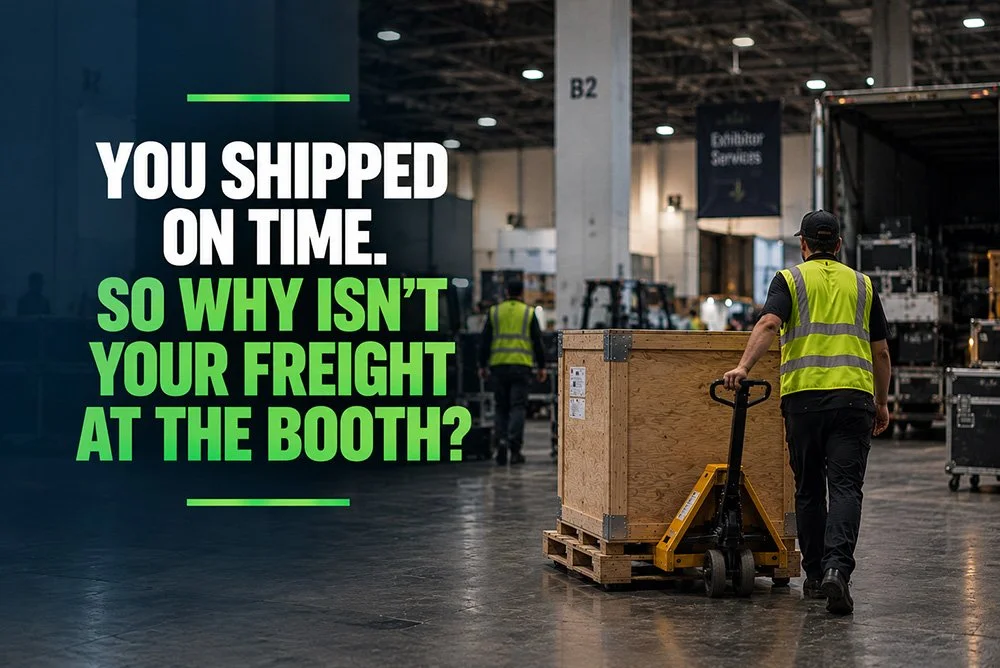
You shipped on time. The tracking looks good. Your team arrives at the show.
But your freight isn't at the booth.
How does that happen?
Trade show shipping operates differently from everyday freight. Getting your shipment on the road on time is important, but it's only one part of getting your booth freight where it needs to be when installation begins.
Shipping On Time Is Not the Same as Arriving On Time
For a trade show, the important date isn't simply when the truck leaves your facility. It's when and where the freight needs to be received.
Shows may have specific advance warehouse deadlines, direct-to-show delivery windows, and targeted move-in schedules. For direct shipments, carriers may also need to check into a marshaling yard during an assigned timeframe before they can proceed to the dock. Missing that window can mean waiting, additional charges, or even refused freight.
That's why working backward from the show's receiving requirements is more important than simply choosing a ship date.
What Can Delay Trade Show Freight?
Even when freight leaves on schedule, several things can slow it down.
Transit delays. Weather, traffic, mechanical issues, and other transportation disruptions can affect a carrier's schedule.
Missed receiving windows. Trade shows don't necessarily accept freight whenever a truck arrives. Some shows use very specific delivery dates and target times.
Marshaling yard congestion. A truck delivering directly to show site may first need to check into a marshaling yard and wait for permission to proceed to the unloading area. The timing of that process can affect when freight reaches the booth.
Incorrect paperwork or labels. Missing booth numbers, incorrect destinations, old labels, inaccurate piece counts, or incomplete shipping documents can create unnecessary problems once freight enters the event logistics system. GES, for example, instructs exhibitors to remove old labels and clearly identify booth numbers on show shipping labels.
Shipping too close to the deadline. A schedule with no buffer leaves little room to recover from an unexpected delay.
Does Shipping to the Advance Warehouse Reduce the Risk?
In many situations, yes.
An advance warehouse allows freight to arrive before show-site move-in begins. Once received, the freight can be staged for delivery to the booth according to the show's schedule. It also gives exhibitors the opportunity to confirm their shipment arrived before installation begins.
That doesn't automatically make the advance warehouse the right choice for every shipment. But when the schedule is tight or the consequences of a late shipment are significant, the extra buffer can be valuable.
Not sure which option makes sense? Our breakdown of advance warehouse vs. show site delivery explains the difference.
How Can You Reduce the Risk of a Freight Delay?
Start with the show schedule, not your preferred ship date.
Confirm the advance warehouse deadline or direct-to-show target date, then work backward to determine when the freight should leave. Build in reasonable transit time, verify the delivery address, and make sure your Bill of Lading and shipping labels match the show's requirements.
Most importantly, don't plan around the best-case scenario.
A knowledgeable event logistics provider can help coordinate the carrier, deadlines, paperwork, receiving requirements, and delivery strategy before the freight ever leaves your dock.